Wednesday, August 31, 2011

A New Arrival

While we were in Ireland this summer we took regular walks into the town.  Near the post office there was a small field with two small ponies and their foals.


Both mares were obviously pregnant again, the fleabitten looked like she was just days away, and I was hoping that she would foal before I had to leave.  Unfortunately, she didn't not, but a friend was able to snap this picture when the foal was only a few days old.  So cute!


Monday, August 15, 2011

Lets Talk Turkey

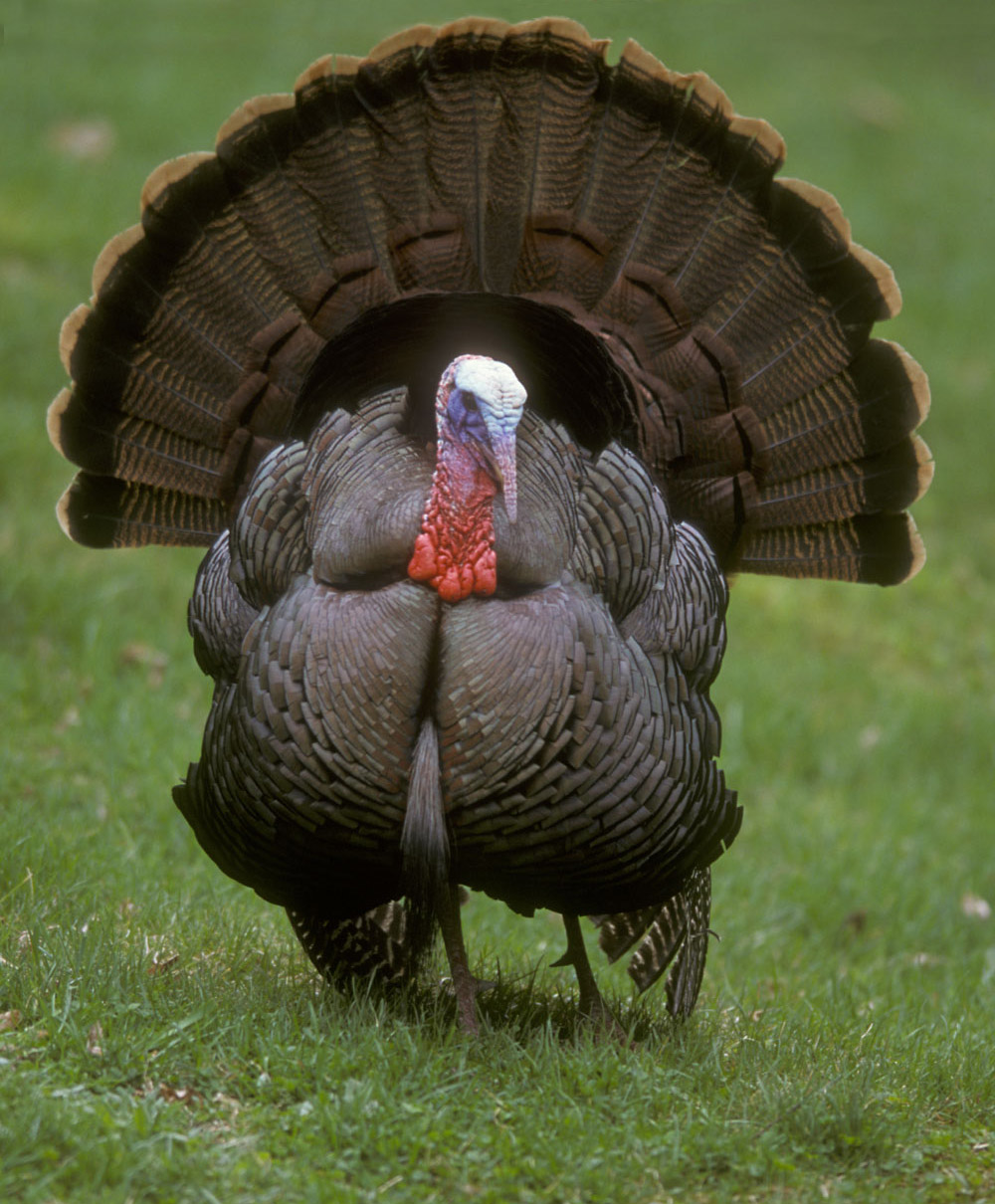
Since we moved to our current home, seven years ago, we have been visited by many groups of wild turkeys.  The first year we were here, we had a pair and their 15 chicks visit our field occasionally.  The couple that sold us the house had named the pair Franklin and Eleanor.  When the chicks had grown and moved on we saw Franklin and Eleanor from time to time pecking their way through the field.


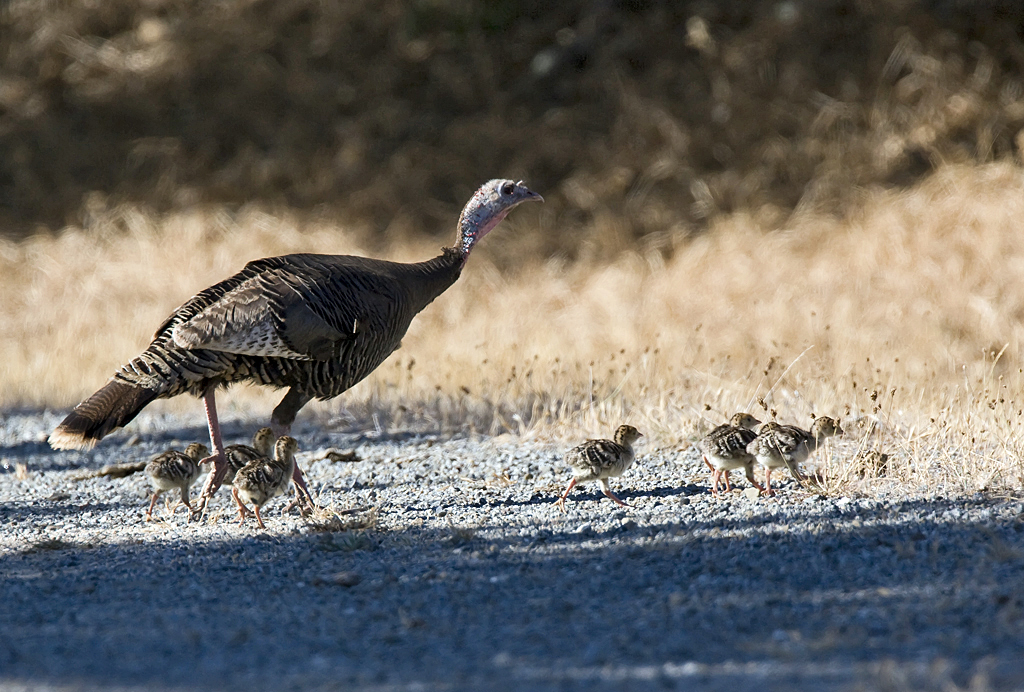
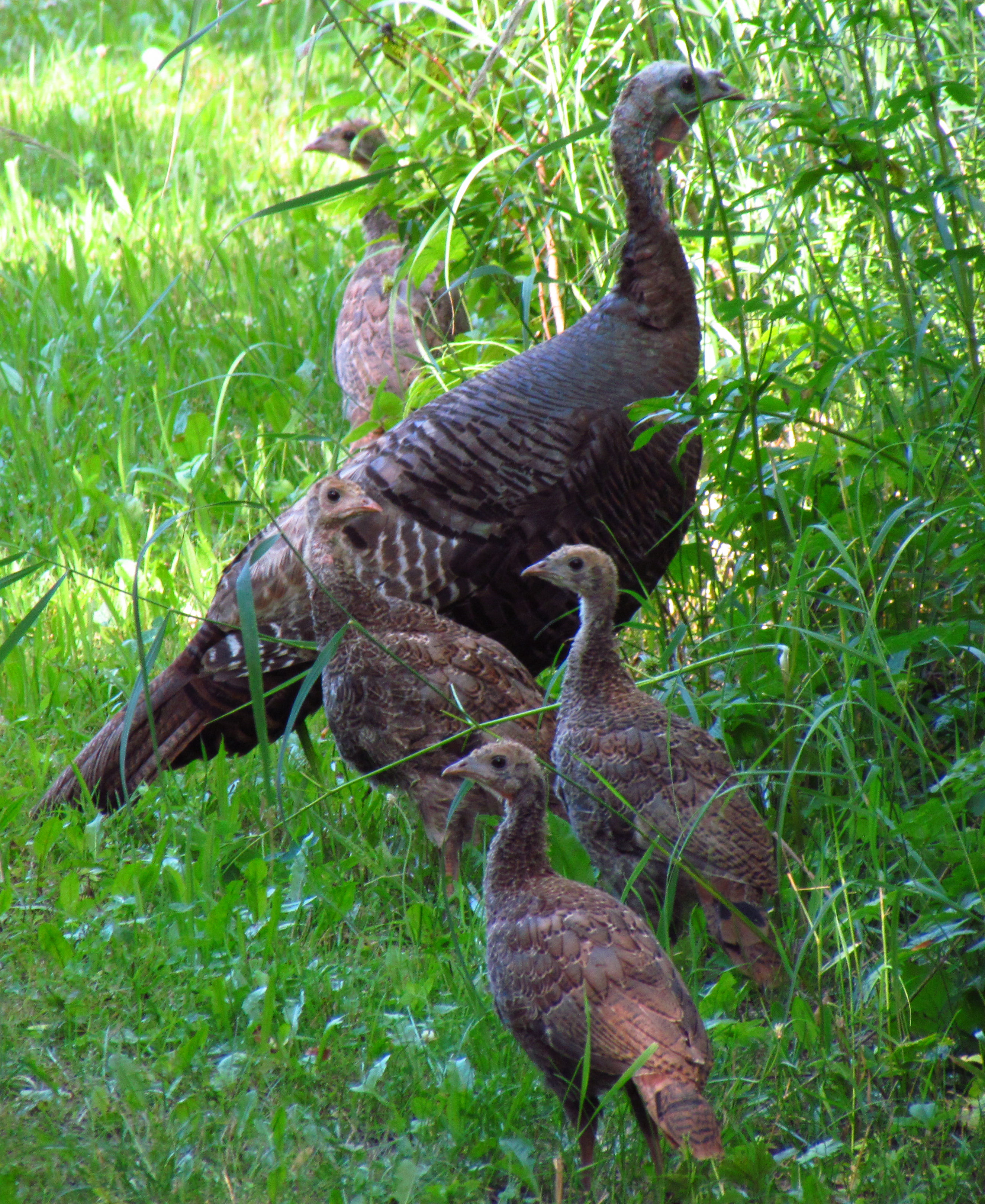
In recent years a third had joined them and we called her Anna (Franklin and Eleanor's only daughter).  We had not seen the trio for awhile, then, this spring, Anna showed up with six poults (baby turkeys).


We have watched Anna carefully tend her little flock all summer.  It is quite a feat to be a single mother of six. Every evening I see them parading across the field nibbling seeds and eating bugs.  I watched them make some of their first flights and have seen them improving everyday.  Most nights they roost in one of the trees in the field or by the house and I watch them as the settle in for the night.


Today I saw one of the larger poults on its own.  It was happily pecking its around my garden, then, with a running start, flew right past me into a tree and found a place to roost.   I was very proud of it, being on its own, but, I was also very sad to think that my little turkeys are growing up.  Soon they will all go their separate ways and I will miss them!

Wednesday, August 3, 2011

My Summer Vacation

I was lucky enough to spend two weeks in Ireland at the beginning of the summer.   Down the road from where I stayed was Long's Horse Riding so, I got in a couple of treks during my trip.  They have beautiful Irish Cobs in all sizes and colors.  The Irish Cob is a very compact, stocky and powerful breed that is known for its docile and willing nature.  They have feathered legs, a luxuriant mane and tail and can be any solid color, including greys and roans, as well as pinto.


This guy is a beautiful example of a an Irish Cob.   Don't you just want to squeeze him!?   When the sun shown on him he had the most gorgeous dapples!


My first trek was an a short trip down to the beach for an invigorating gallop down the strand and back.  Unfortunately, during our first pass I was stuck behind a pony and had to keep holding my horse from running up the pony's backside.  (darn those ponies and their short strides!)  When we turned around I was able to get in front of the pony and just let my horse go.  Great fun!  There is nothing like a gallop on the beach!


My second trek was on this guy, King.  What a handsome man!  We went on a mountain ride and had a wonderful canter up the mountain you can see in the back.


What a beautiful view!  I can't wait to go back!

Monday, June 20, 2011

Bit Basics

Bits come in all shapes, sizes and materials and rest on the tongue in the space between the incisors and the molars.   It places pressure on the tongue, the fleshy sides of the mouth, called the bars, and, in some cases, the poll or top of the head.


I am going to focus on the snaffle type bit here today because it is the only type that uses a single rein and is also the most common.  There are several different types of cheek pieces and mouth pieces which, when combined, create a myriad of styles that can be as unique as the horse that wears it.


Loose Ring and Eggbutt Snaffles

This picture has examples of two of the most basic snaffles, an eggbutt in the center, and loose ring on either side.  On the eggbutt, the ring is fixed and can not rotate through the mouthpiece so it does not pinch the horse's lips.  The loose ring tends to let the horse relax it's jaw a bit more, but it can pinch the lips.  All three of these bits are stainless steel and have a basic single joint in the middle.


Rubber Full Cheek
This is a full cheek snaffle.  This also is a single joint, but it is rubber coated.  The full cheek's distinguishing characteristics are the bars that extend above and below the ring.  This was Toby's first bit.  I choose this because the bars  help to guide the horse laterally and prevent the bit from sliding through the mouth.  An important tool for training a young horse how to turn.

The rubber coating helps a young horse except the bit easier.


French Link Full Cheek
This is what I ride Toby in now.  It is still a full cheek that will aid in turning, but I have switched him to a regular stainless steel with a double jointed "french link" in the middle.  This link lays flat on the tongue and reduces the "nutcracker" action that the single joint has.  This is a very mild bit.


The french link is not to be confused with the "Dr. Bristol" which looks very similar, but the link in the middle in turned 45 degrees so the edge rests against the tongue.  This creates a pressure point on the tongue and is more severe.


 Synthetic French Link D-ring
This is the bit I ride Casey in.  It is a D-ring french link snaffle with a plastic mouthpiece.  Casey has a very sensitive mouth and it took me years to find a bit that doesn't make him "chomp" constantly.  The synthetic plastic material is often more acceptable to horse with sensitive mouths and the french link makes this very mild. The straight sides of the D-ring help to aid in lateral movement much like the full cheek, without being overpowering.  Casey has accepted this bit although there is still some chomping occasionally.  I think he would be much happier in a hackamore or a bitless bridle.  That will be my next endeavor.

So that is just the tip of the iceberg when it comes to bits and bitting.  I hope to cover more in future blogs so, stay tuned!


Thursday, June 2, 2011

Awwww!


Our first clutch of Pheobe chicks just about ready to leave the nest.

Sunday, May 29, 2011

What is wrong with ewe?

I was watching the Preakness with my husband last week and as Mucho Macho Man paraded by he said "What is wrong with that horse?".

He was referring to the horse's "ewe neck".   This occurs when a horses is poorly muscled over the top-line and has a noticeable dip in the neck just before the withers.  It tends to make the neck look skinny and a bit odd.
Ewe Neck

Average Neck


It is not just a cosmetic problem, however.  These horses hold their heads high which can make the horse difficult to control while riding.  The bit does not contact the mouth correctly and can leave the rider with minimal steering and "brakes".

This condition is typically seen in young horses (Mucho Macho Man) and undernourished horses where muscles are underdeveloped.  The good news is that is can be corrected with proper conditioning and exercise.


Tuesday, May 17, 2011

How to Build a Tack Trunk, Part Two

Yeah!  I finally finished it!  Here is what I did:

I started by attaching a chain to either side of the lid to keep it from flopping back when opened.


Then I started a small storage box.  I cut the pieces to size and routered them.

I glued and nailed the box together,  countersunk the nails and filled the holes.

Then stained it.


Next I worked on the brush box.  Again, I cut the pieces to size...


routered...

and glued and nailed.


I used a 5/8" dowel for the handle.  After drilling a hole at either end of the box and inserting the dowel, I countersunk a nail through the top on both sides to keep the dowel from moving. Then stained the whole box.

I added some cleats on the inside of the trunk so the boxes would have a place to rest and...


Voila!  The finished product!